
Mexico's entry rules have evolved in recent years, yet most travelers are still relying on outdated information. Here's what's actually changed, what you may need to prepare before arrival, and the in-airport confusions that catch even seasoned visitors off guard.
TL;DR
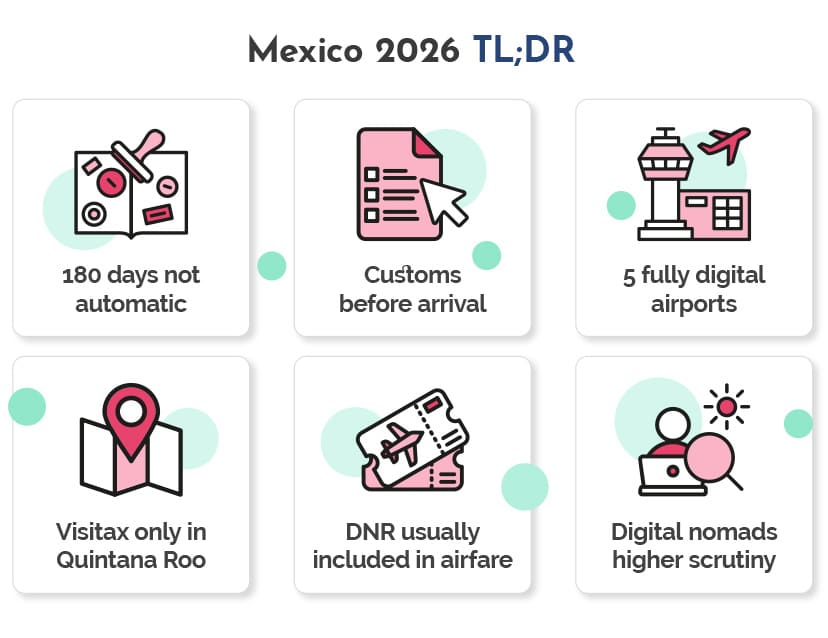
- Don’t assume you’ll automatically be granted a 180-day stay. The length of your stay is decided by an immigration officer when you enter Mexico.
- Customs declarations can be prepared online in advance for any goods, professional equipment, restricted items, or cash above the applicable threshold.
- You generally won’t need a paper FMM if you’re flying to Mexico. Land arrivals still need their FMM processed or validated at the border.
- Visitax applies only in Quintana Roo. If your trip is to Puerto Vallarta, Los Cabos, or Mexico City, you don't need it.
- The federal tourism tax (DNR) is already bundled into your international airfare. Don't pay it twice at airport counters.
Mexico’s 47.8M Tourist Boom: Is Infrastructure Keeping Up?
Mexico welcomed a record-breaking 47.8 million overnight international tourists in 2025, with the United States, Canada, and the United Kingdom representing the bulk of long-haul arrivals.
Yet behind those numbers lies an evolving regulatory landscape: the National Migration Institute (INM) has expanded digital immigration processing, and passenger customs declarations can now be prepared online.
The result? Different entry processes depending on how and where you enter Mexico, what you pack, and how long you plan to stay.
Mistake #1: Confusing Mexico's Three Different Travel Documents
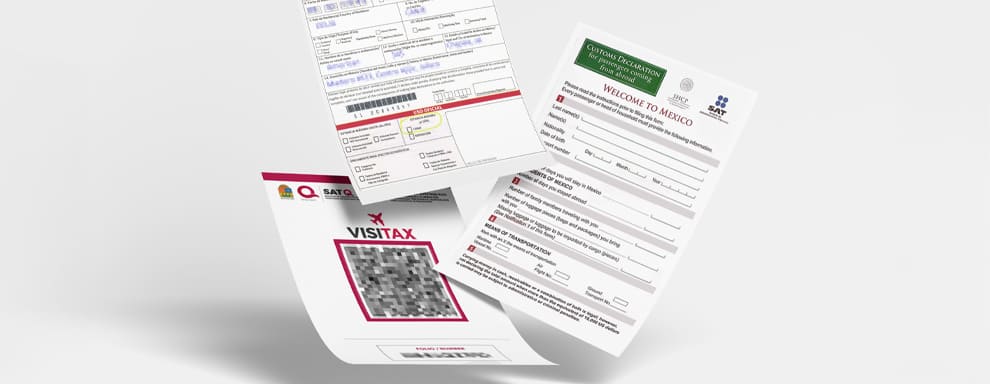
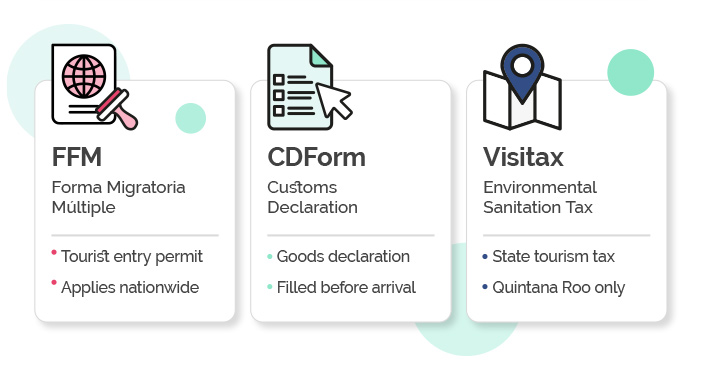
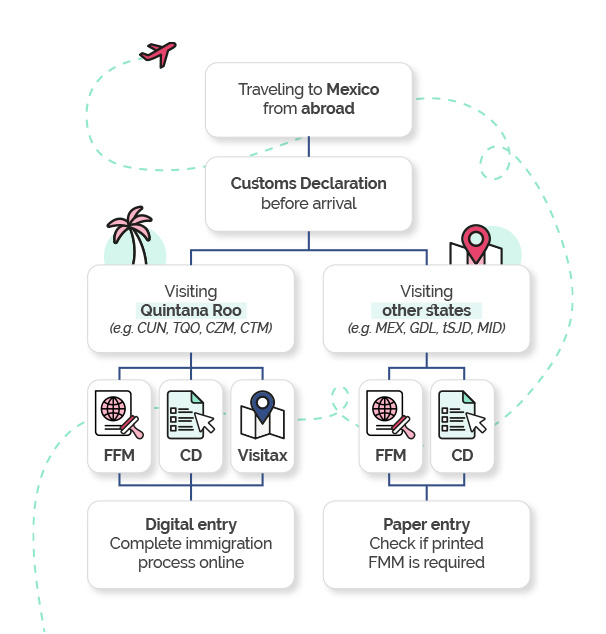
Depending on your trip, you may need to deal with up to three distinct travel documents or requirements, each with different rules, geographies, and timing:
VisaSyst’s internal data from over 8,000 traveler inquiries shows widespread confusion among these three documents, including travelers paying Visitax for trips to Puerto Vallarta (Jalisco) or Rocky Point (Sonora), where the tax simply doesn't apply. One traveler put it bluntly: "My vacation is in PVR Jalisco County. I misread the online information."
Quintana Roo accounts for roughly half of all international air arrivals to Mexico, meaning about 50% of tourists genuinely need Visitax, and 50% don't. Knowing which side of that line you fall on is the first step.
Mistake #2: Not Understanding Your Airport's Entry System
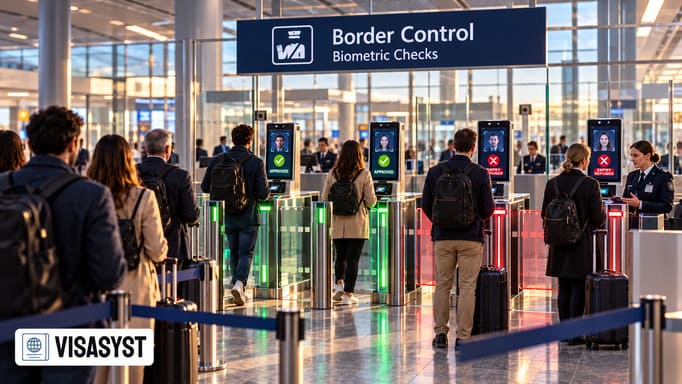
Mexico's immigration process now varies depending on how and where you enter, which can make online guidance seem contradictory. If you’re flying into Mexico, you generally won’t need a paper FMM. Some airports also offer automated immigration gates for eligible passengers. Staff on the ground will advise you if it’s possible to use them in your case.
If you’re entering by land, you may complete the FMM information online, but it still needs to be processed or validated at the border.

Mistake #3: Assuming the "180-Day Rule" Still Applies
You shouldn’t assume you’ll automatically be granted a 180-day stay. Immigration officers determine how long you can stay when you enter Mexico, up to a maximum of 180 days.
Mexperience, one of the most-cited English-language Mexico travel resources, confirms that visitors are now granted "a number of days commensurate with their stated purpose and travel circumstances".
The US Department of State's official Travel Advisory similarly notes that while a formal visa is required only for stays exceeding 180 days, the granted duration is no longer guaranteed to match that maximum.

For travelers who genuinely need more than 180 days, the Temporary Resident Visa may be an option. Financial requirements vary, so check the requirements of the Mexican consulate responsible for your place of residence.
Mistake #4: Treating the Customs Declaration as an Afterthought
Passenger customs declarations can be completed online in advance and, when required, must be presented before proceeding through customs inspection.
The duty-free allowance currently stands at US$500 whether you enter by air, land or sea. You must also declare cash or equivalent worth more than US$10,000.
Professional equipment can also attract additional attention at customs, particularly if you're traveling with multiple cameras, drones, hard drives or other high-value gear.
The takeaway: prepare your declaration in advance if needed, declare honestly, and budget extra time on arrival if you're traveling with professional or high-value equipment.
Mistake #5: Paying Fees Twice at the Airport Counter
The most overlooked travel document confusion happens at airline counters and immigration desks. Here are the four most documented friction points:
The DNR (Federal Tourism Tax)
The Federal Tourism Tax is automatically bundled into every international airline ticket flying into Mexico. Yet travelers regularly report being charged this fee a second time at airport counters, particularly during connection flights.
Travelers occasionally report being charged the DNR a second time at airline counters, particularly during connection scenarios.
Visitax confusion at Quintana Roo airports
Travelers who already paid online are occasionally asked to "verify" or "re-pay" by individuals in terminal hallways.
The official position of state authorities is that Visitax should be paid before leaving the state, and no random airport agent should collect cash payments.
Departure tax confusion at smaller airports
While Cancún, Mexico City, and Guadalajara include the departure tax in airfare, smaller regional airports (such as Oaxaca, Huatulco, and some Pacific coast destinations) occasionally still request cash payment if the airline didn't bundle it.
Hotel "tourist tax" add-ons
Mexico City and Quintana Roo impose a legitimate lodging tax (Impuesto Sobre Hospedaje) of 3-4% of the room rate. Some hotels also charge "environmental sanitation fees" or "resort fees" that are not mandated by the government.
Different Travelers, Different Pain Points
Not every traveler experiences these issues equally when visiting Mexico. Based on inquiry data and traveler patterns, here's where each major source market tends to stumble:
How VisaSyst Can Help
VisaSyst.com is an independent, third-party agency that helps travelers prepare and file travel documents and requirements that may apply to their trip, including FMM-related documentation, electronic customs declarations, and Visitax payments for trips to Quintana Roo.
We're not the Mexican government, and we don't claim to be. What we offer is a clear, English-language interface, document review, and human support for travelers who'd rather not navigate the relevant government systems in Spanish the night before their flight. For travelers comfortable with the official systems, those remain freely available.
Methodology
This article is based on three combined data sources:
- Internal traveler inquiry data from over 8,000 customer service interactions logged across VisaSyst's Mexico-related travel documents (FMM, Customs Declaration, and Visitax) between March 2025 and March 2026, anonymized and aggregated to identify recurring confusion patterns.
- Behavior data from VisaSyst's Mexico product portfolio, segmented by passport nationality and entry document type.
- External verification through official sources (US State Department, SECTUR, SAT México), legal advisories (Baker McKenzie), and primary traveler reporting from Mexperience, Reddit's digital nomad community, and regional traveler forums.
Expert commentary was provided by Nina Ragusa, a travel writer drawing on years of personal experience with entry at multiple Mexican airports and land borders.
References
- SECTUR / US Travel Association: Mexico 2025 international tourism statistics → https://www.sectur.gob.mx
- Quintana Roo State Tourism Board: International arrival data
- Mexperience: Changes to Time Allowed in Mexico Using a Visitor Permit → https://www.mexperience.com/changes-to-time-allowed-in-mexico-using-a-visitor-permit/
- US Department of State: Mexico Travel Advisory → https://travel.state.gov/en/international-travel/travel-advisories/mexico.html
- Reddit r/digitalnomad community discussion: 180 days in Mexico? → https://www.reddit.com/r/digitalnomad/comments/1iwlbe0/180_days_in_mexico/
- Backroad Planet: What Travelers Should Know About Mexico's Tourist Tax to Avoid Airport Fines → https://backroadplanet.com/what-travelers-should-know-about-mexicos-tourist-tax-to-avoid-airport-fines/