

Verified by the VisaSyst Editorial Team
After visiting more than 70 countries, travel expert Ellie Quinn Belhaj has learned firsthand that packing a passport is only the first step in international travel preparation.
From unexpected entry permissions to strict passport validity windows, her extensive journeys highlight a crucial reality for modern travelers: border rules are increasingly digitized, strict, and unforgiving of last-minute checks.
Depending on your destination and transit route, you may require an electronic travel authorization (such as an ESTA or eTA), a mandatory digital arrival card, or verified proof of onward travel.
To help protect your travel investment from sudden airport disruptions, VisaSyst teamed up with Ellie to turn her real-world travel routine into an actionable, step-by-step checklist before you head to the terminal.
Traveling abroad soon?
Check your destination requirements now
Ellie Quinn Belhaj: “My International Travel Document Checklist Always Starts With My Passport”
“My passport (and now, my kids’ passports) are always the first item I verify. Over the years, the biggest lesson I’ve learned is that a passport’s expiration date is rarely the last date you can legally travel.
Most destinations enforce strict 3-month or 6-month validity buffers beyond your planned departure date. A few years ago, we were planning a summer trip to Europe when I decided to check my stepson’s passport expiration date. It wasn’t technically expired, but because it had less than three months of validity remaining, he would have been denied entry at the border. We had to apply for an urgent replacement just to save the holiday.
Another detail travelers frequently overlook is blank page space. Many immigration authorities still require at least one or two fully blank visa pages for entry and exit stamps.
As a UK passport holder traveling through Europe post-Brexit, our passports are stamped upon every entry and exit now. Pages fill up surprisingly fast, and running out of physical space can get you grounded just as quickly as an expired document.”
VisaSyst Expert Note: If your home country permits it (such as the UK Frequent Traveler passport), choose a jumbo/frequent-traveler passport with extra pages. It minimizes the risk of needing an expensive early renewal simply because you ran out of stamping room.
Check If Your Destination Requires a 3-Month or 6-Month Passport Buffer
I Check Exactly What Entry Permission I Actually Need
“Once I confirm my passport meets validity rules, I figure out the exact entry clearance required for my trip, whether that’s an electronic authorization, an eVisa, a traditional visa, or simply an entry stamp.
The lesson I keep relearning after 70+ countries is simple: visa-free travel does not mean document-free travel.
South Korea was my wake-up call. After hopping between several Southeast and East Asian destinations where I only needed my passport, I became complacent. Just days before departure, I realized my nationality required an electronic travel authorization. I managed to secure it in time, but it was a stress level I could have easily avoided.”
Going to Seoul? Don’t leave your documentation to the last minute
Apply for your South Korea K-ETA with VisaSys
Another major potential trap is Australia. Over the years, I’ve lost count of how many travelers show up at the check-in desk assuming Australia doesn’t require prior authorization because it feels familiar. They only realize they need an Australian visa or ETA when the airline agent refuses to issue their boarding pass.
Depending on your citizenship, you may be eligible to apply for an Australian ETA online. While some electronic applications are approved quickly, processing times are never guaranteed. I personally know travelers who missed non-refundable, multi-thousand-dollar flights simply because they assumed approval would be instantaneous.
Finally, keep an eye on application windows. Certain destinations, like India, restrict how early you can submit an eVisa application. For instance, if an application opens 30 days before departure, I set a calendar alert for that exact date rather than relying on memory.”
VisaSyst Expert Note: Pre-travel digital authorizations (ETAs and eVisas) are linked directly to your passport number. If you renew or replace your passport after getting an approved authorization, your permission becomes invalid, and you must reapply before traveling.
Get Your Australia ETA Online
I Never Forget to Check My Transit Countries
“It is not only your final destination that dictates your paperwork; connecting countries often have transit rules just as strict as entry requirements.
Connecting through the United States is the most critical example. Even for a brief two-hour layover where you never leave the airport terminal, the U.S. government requires travelers to hold a valid visa or an approved US ESTA. You will go through full U.S. immigration, collect your baggage, and re-check it.
This caught me by surprise on a trip to Mexico. I had originally booked flights connecting through Amsterdam specifically to avoid U.S. transit requirements. However, a few weeks before departure, the airline modified our return schedule, rerouting us through a U.S. airport. That unexpected schedule change meant my entire family had to apply and pay for US ESTAs on short notice just to complete our return trip home.”
The VisaSyst Transit Warning: Airlines automatically cross-reference passenger manifests with destination and transit government databases prior to departure. If your route includes a layover in a country requiring electronic authorization (like the US ESTA or Canada eTA) and you don't have it, check-in software will issue an immediate “Do Not Board” command.
Layover in the US? Secure your transit authorization before check-in.
Apply for Your US ESTA Transit Authorization
I Keep Proof of My Onward Travel and Accommodation Easy to Find
“Before heading to the terminal, I always save offline screenshots and physical printouts of my initial accommodation confirmation (including the full street address) and my return or onward flight details.
Why? Because both airline check-in staff and border officers frequently request to see verifiable proof that you intend to leave the country within your authorized stay before allowing you to board.
Having offline copies means I never have to panic about finding airport Wi-Fi or enabling roaming data just to prove where I’m staying on night one.”
VisaSyst Expert Note: Border control algorithms and airline agents do not accept verbal promises of onward travel. If your destination requires proof of departure and you cannot present a confirmed ticket, airlines will legally refuse boarding to avoid repatriation penalties.
I Check for Arrival Forms and Destination-Specific Paperwork
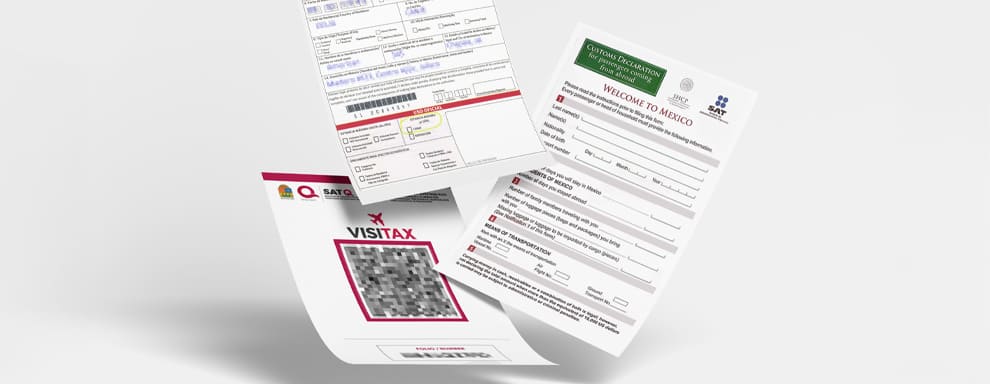
“Sorting out your main visa or electronic authorization is rarely the final step. A growing number of destinations now mandate secondary pre-arrival paperwork, such as digital arrival cards, health declarations, tourist registration forms, or mandatory customs declarations.
Egypt is a prime example of where I learned to verify entry documentation carefully before traveling, rather than assuming past experiences in neighboring countries would apply.
Similarly, destinations like Singapore require all travelers to submit a digital Singapore Arrival Card within a strict 72-hour window prior to arrival. Missing these short application windows is one of the easiest ways to get delayed at passport control.”
Getting the main visa or authorization sorted is rarely the end of the story. Many destinations also expect other documents, such as an arrival card, a customs declaration, a health declaration, or some form of tourist registration, and these can change depending on current rules.
Don't let mandatory arrival forms catch you off guard at the gate.
Submit Your Singapore Arrival Card Online
I Save Travel Doc Copies, But I Don't Rely Only on My Phone
“Health certificates, travel insurance details, and emergency contact numbers get the exact same treatment: organized and readily accessible.
While digital storage is essential, I always carry physical paper copies of my core documents. Landings don’t always go as planned—you might have no mobile network coverage on arrival, or end up with a dead phone battery after a 12-hour flight with no immediate access to a charging station.
Physical printouts are also a lifesaver when traveling with family. Instead of scrambling to unlock a phone, locate individual PDF files, and toggle between multiple screenshots for your spouse and kids, handing border officers a neat set of printed documents speeds up immigration for everyone.”
The Non-Negotiable: Re-Check Your Documents Before You Leave
“If there is one habit that ties my entire travel routine together after 70+ countries, it is checking my documentation more than once.
My mandatory re-checking routine follows four distinct stages:
- At initial booking: Identify visa/ETA types and passport validity buffers.
- During trip planning: Set calendar alerts for time-sensitive application windows (e.g., 30-day or 72-hour limits).
- A few days before departure: Confirm all electronic authorizations are approved and printed.
- Right before leaving for the airport: Re-verify that entry rules or system protocols haven’t changed.
Digital travel systems and immigration policies evolve rapidly. Never assume that a rule you checked six months ago will remain identical on your day of travel.”
My Quick International Travel Document Checklist
Before closing your suitcase, make sure you can check off every item on this list:
- Passport validity & condition: Meets the destination's 3-month or 6-month buffer and has sufficient blank pages.
- Primary permission: Approved visa, eVisa, or electronic travel authorization (like a US ESTA or Canada eTA).
- Transit clearances: Verified requirements for any connecting airports or stopovers.
- Arrival & customs cards: Completed destination-specific forms (such as mandatory health or arrival declarations).
- Onward travel: Printed or screenshotted proof of return flights.
- Accommodation proof: Verified address and booking details for your stay.
- Insurance & medical: Accessible policy numbers, emergency contacts, and prescription letters.
- Offline & paper copies: Hard copies kept separately from your main digital devices.